Electrician Baltimore County MD services face new compliance challenges after the county adopted NEC 2023 in August 2023, creating requirements that 40% of older homes can’t meet without electrical upgrades. These changes affect everything from electrical panel upgrades and whole house rewiring to electrical safety upgrades and emergency electrical services.
Key Takeaways:
- Maryland Master General Electrician License requires 8,000 hours experience plus state exam passage
- Baltimore County housing stock built before 1970 comprises 35% of residential properties requiring specialized wiring knowledge
- Permit fees range from $75 for basic outlet work to $300 for panel upgrades through Baltimore County Electrical Inspection Office
Licensed Electrician Baltimore County Requirements

Maryland Master General Electrician License is the credential that legally authorizes electrical work on residential properties in Baltimore County. This means only licensed contractors can perform installations, repairs, or modifications to residential wiring systems.
Maryland operates a three-tier licensing system. Apprentices work under supervision with 0-4,000 hours of training. Journeyman electricians hold 4,000-8,000 hours of experience and can work independently on specific projects. Master General Electricians complete 8,000 hours of field experience plus pass the state examination, qualifying them to pull permits, supervise other electricians, and operate electrical contracting businesses.
The Baltimore County Electrical Inspection Office requires all electrical contractors to register locally before starting work. Registration involves submitting proof of state licensing, insurance documentation showing minimum $300,000 general liability coverage, and a $10,000 performance bond. Contractors must renew their county registration annually and maintain active workers’ compensation insurance for all employees.
Insurance requirements protect property owners from liability. General liability covers property damage during electrical work. Workers’ compensation protects homeowners if an electrician gets injured on their property. Professional liability insurance covers errors in electrical design or installation that could cause fires or equipment damage.
Baltimore County also requires contractors to demonstrate knowledge of local building codes and BGE interconnection procedures. Many residential electrical projects require coordination with Baltimore Gas & Electric for meter relocations or service upgrades. Licensed electricians understand these coordination requirements and timeline impacts on project completion.
How to Find a Qualified Electrician in Baltimore County

Verify licensing through the Maryland Department of Labor website using the contractor search function. Enter the business name or license number to confirm active status and check for violations or complaints.
Check Baltimore County Electrical Inspection Office registration using their online contractor database. The county maintains records of 847 registered electrical contractors with current insurance and bonding documentation.
Request proof of insurance directly from the contractor including general liability, workers’ compensation, and professional liability certificates. Insurance certificates should name your property address and project dates.
Ask for references from recent residential projects similar to your work scope. Contact at least three references to verify work quality, timeline adherence, and permit compliance.
Obtain detailed written estimates from three licensed contractors including labor, materials, permits, and inspection fees. Compare scope of work descriptions to identify any missing elements.
Verify the contractor’s experience with Baltimore County permit and inspection processes. Ask specific questions about typical inspection timelines and common code compliance issues.
Review contract terms carefully including payment schedules, change order procedures, and warranty coverage. Never pay more than 10% down payment before work begins.
Red flags include door-to-door solicitation, cash-only payment requests, no fixed business address, pressure to sign contracts immediately, or quotes significantly below other estimates. Unlicensed contractors cannot obtain permits or schedule inspections, leaving homeowners liable for code violations.
During consultations, ask about their experience with NEC 2023 requirements, familiarity with Baltimore County’s inspection process, and approach to permit applications. Qualified contractors should explain permit requirements, inspection checkpoints, and timeline expectations clearly.
What Residential Electrical Services Do Baltimore County Electricians Provide?
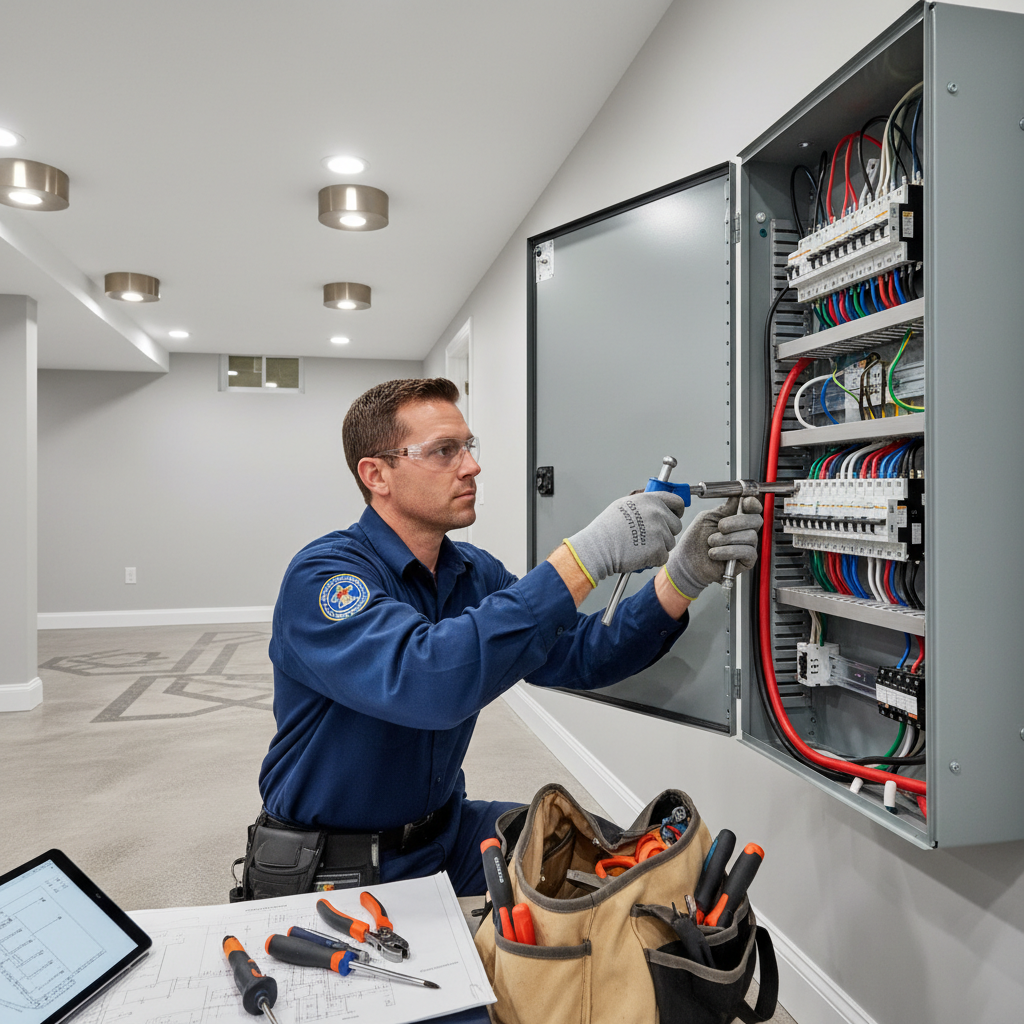
Residential electrical services in Baltimore County span from basic repairs to complete system installations. The scope varies significantly based on project complexity and NEC 2023 compliance requirements.
| Service Category | Typical Projects | NEC 2023 Impact |
|---|---|---|
| Panel Services | 100A to 200A upgrades, subpanel installation | AFCI/GFCI requirements expanded |
| Wiring Projects | Full rewiring, circuit additions, EV charger prep | Enhanced grounding requirements |
| Safety Upgrades | GFCI installation, smoke detector hardwiring | Tamper-resistant outlets mandatory |
| Repairs | Outlet replacement, switch installation, troubleshooting | Code compliance verification required |
| Emergency Services | Power restoration, hazard elimination, temporary fixes | Same-day inspection coordination |
Electrical panel service capacity determines what equipment your home can support. Most Baltimore County homes built before 1990 have 100-amp service, while modern homes require 200-amp panels for EV chargers, heat pumps, and high-efficiency appliances. Panel upgrades involve coordinating with BGE for meter replacement and require Baltimore County electrical compliance review.
Residential wiring systems include branch circuits serving outlets, lighting, and major appliances. Modern installations require AFCI (Arc Fault Circuit Interrupter) protection on most circuits and GFCI (Ground Fault Circuit Interrupter) protection in wet locations. NEC 2023 expanded these requirements to include more room types and circuit configurations.
Emergency electrical services address immediate safety hazards like exposed wiring, electrical fires, or complete power loss. Emergency electricians can perform temporary repairs to restore power safely, but permanent fixes require permits and inspections through normal channels.
Average residential service calls address 2.3 separate electrical issues per visit. Electricians often discover additional problems during diagnostic work, particularly in older homes with outdated wiring or previous DIY modifications.
The distinction between residential and commercial electrical work involves different licensing requirements, code sections, and equipment specifications. Residential electricians focus on single-family homes, townhouses, and small multi-unit buildings using standard household voltages and equipment.
Baltimore County Electrical Permit and Inspection Process

Determine permit requirements by project scope through the Baltimore County Electrical Inspection Office website or phone consultation. Minor repairs like switch replacement don’t require permits, while outlet additions and all wiring modifications do.
Submit permit application with detailed work description, electrical plans, and fee payment. Applications require licensed contractor information and property owner authorization.
Schedule pre-work inspection for major projects like panel upgrades or rewiring work. Inspectors verify existing conditions and approve work plans before construction begins.
Complete electrical work according to approved plans and NEC 2023 requirements. Work must remain accessible for inspection until final approval.
Request final inspection within 24 hours of work completion. Inspectors verify code compliance, proper installation techniques, and safety requirements.
Coordinate BGE connection for service upgrades after final inspection approval. BGE requires county inspection certificates before energizing new electrical services.
Permit and inspection process requires Baltimore County Electrical Inspection Office approval at multiple stages. The process protects homeowners by ensuring code compliance and proper installation techniques. Inspection scheduling averages 5-7 business days from permit approval, though emergency inspections are available for safety hazards.
NEC 2023 compliance affects permit reviews through enhanced AFCI requirements, updated grounding standards, and expanded GFCI protection rules. Inspectors verify these requirements during field inspections and may require corrections before approval.
Permit fees vary by project scope: $75 for basic outlet work, $150 for circuit additions, $200 for subpanel installations, and $300 for main panel upgrades. Additional fees apply for re-inspections if work fails initial review.
BGE coordination becomes critical for service upgrades requiring meter changes or new service connections. The utility requires county inspection approval before scheduling connection work, adding 10-14 days to project timelines.
How Much Does an Electrician Cost in Baltimore County?

Electrical service costs vary significantly based on project complexity, permit requirements, and material specifications. Understanding cost factors helps homeowners budget accurately and compare contractor estimates.
| Service Type | Price Range | Factors Affecting Cost |
|---|---|---|
| Service Calls | $125-$200 | Distance, time of day, diagnostic complexity |
| Outlet Installation | $150-$300 | Circuit availability, GFCI requirements, wall access |
| Panel Upgrades | $2,200-$4,800 | Amp capacity, permit complexity, BGE coordination |
| Circuit Installation | $300-$800 | Length, accessibility, NEC 2023 compliance |
| Full Rewiring | $8,000-$15,000 | Square footage, permit scope, fixture count |
| Emergency Service | $200-$500 | After-hours premium, safety hazard level |
Electrical service costs depend on several key factors. Project complexity affects labor hours and material requirements. Permit fees add $75-$300 depending on work scope. Material costs fluctuate based on copper wire prices and equipment specifications. Emergency services carry 50-100% premiums for after-hours or weekend calls.
Electrical panel service capacity upgrades represent the most common major expense. 100-amp to 200-amp upgrades cost $2,200-$3,500 for standard installations. Complex upgrades requiring service entrance relocation or extensive permit coordination reach $4,800. These projects require BGE meter replacement adding $500-$800 in utility fees.
Residential wiring system costs depend on accessibility and code compliance requirements. Surface-mounted conduit costs less than in-wall wiring but looks less finished. NEC 2023 AFCI requirements add $75-$125 per circuit in breaker and material costs.
Labor rates in Baltimore County average $85-$125 per hour for licensed electricians. Master electricians command premium rates due to licensing requirements and project responsibility. Helper rates run $45-$65 per hour for basic installation work under supervision.
Permit fees directly impact project costs and vary by work scope. The Baltimore County Electrical Inspection Office charges based on project value and complexity. Re-inspection fees of $100-$150 apply if work fails initial review, making proper installation critical for cost control.
Baltimore County Housing Stock and Common Electrical Issues
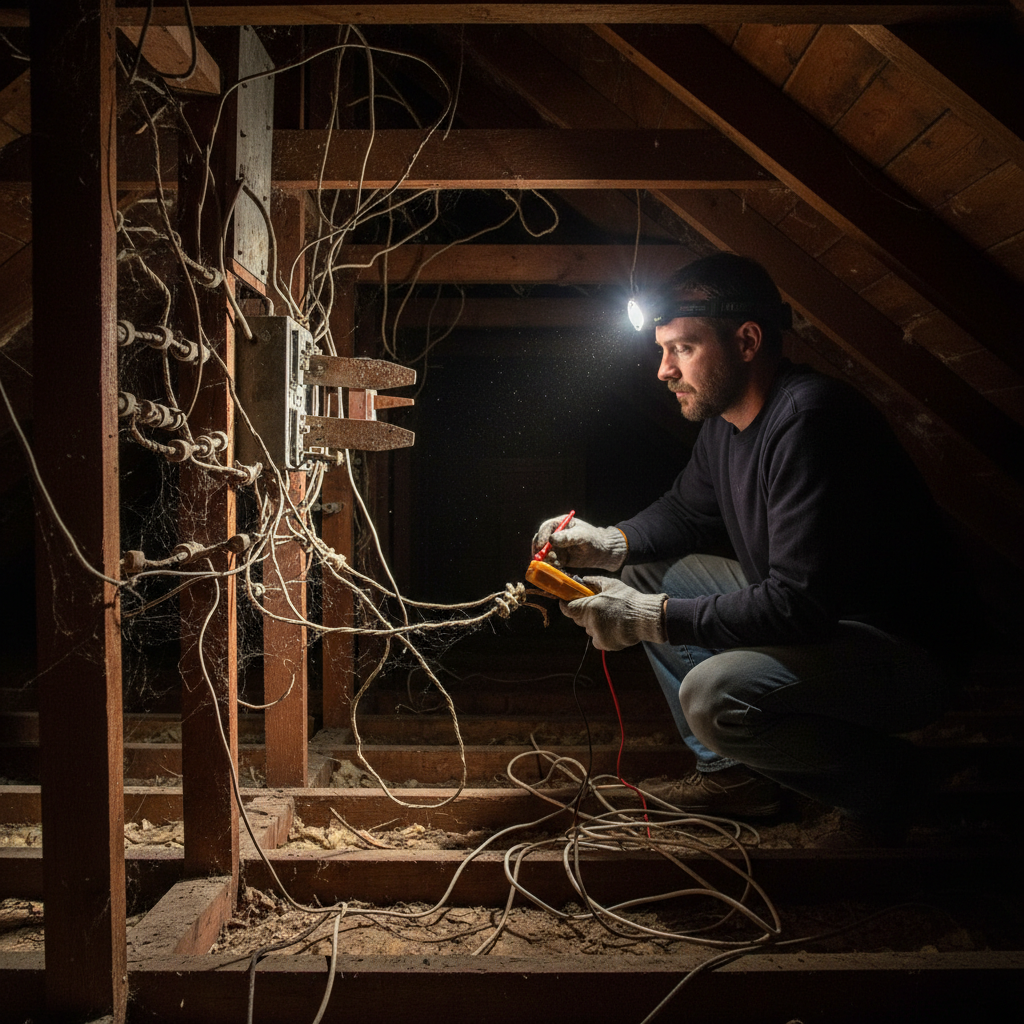
Baltimore County housing stock presents unique challenges for electrical contractors due to construction era variations and evolving safety standards. Understanding these patterns helps homeowners identify potential issues and plan upgrades appropriately.
- Pre-1950 homes feature knob-and-tube wiring systems that lack grounding conductors and use outdated insulation materials creating fire risks and insurance complications
- 1950-1970 construction typically includes early Romex wiring with aluminum branch circuits that require specialized connection techniques and regular maintenance to prevent overheating
- 1970-1990 homes often have 100-amp electrical panels insufficient for modern electrical loads including heat pumps, EV chargers, and high-efficiency appliances
- Post-1990 construction meets modern safety standards but may need updates for smart home integration and renewable energy systems
Baltimore County housing stock contains 35% pre-1970 homes with outdated electrical systems requiring specialized contractor knowledge. These properties often need comprehensive upgrades to meet current safety standards and support modern electrical demands.
Common electrical issues vary by construction era but follow predictable patterns. Pre-war homes need complete rewiring to add grounding systems and replace deteriorated insulation. Mid-century homes require panel upgrades and aluminum wiring remediation. Newer homes typically need capacity increases and smart technology integration.
Residential wiring systems in older Baltimore County homes present specific safety concerns. Aluminum wiring requires CO-ALR rated devices and special connection techniques. Federal Pacific and Zinsco panels have known failure rates requiring replacement. Knob-and-tube wiring cannot support modern electrical loads safely.
Insurance companies increasingly require electrical upgrades in older homes. Many insurers won’t cover properties with knob-and-tube wiring, aluminum branch circuits, or obsolete panel brands. These requirements drive electrical upgrade projects and affect home sale negotiations.
Specialized expertise becomes critical when working on vintage Baltimore County homes. Contractors must understand historical wiring methods, local building code evolution, and insurance requirements. Generic electrical knowledge isn’t sufficient for complex retrofit projects in century-old properties.
Frequently Asked Questions
What areas does a Baltimore County electrician cover?
Baltimore County electricians serve all incorporated areas including Towson, Catonsville, Dundalk, Essex, and unincorporated communities. Service area coverage extends to all residential properties within Baltimore County jurisdiction requiring Maryland Master General Electrician License holders.
Who is the best electrician in Baltimore County MD?
The best electrician holds a Maryland Master General Electrician License, maintains Baltimore County Electrical Inspection Office registration, and demonstrates experience with the county’s diverse housing stock. Verify credentials through the county’s contractor database before hiring.
Do I need a licensed electrician for small electrical work in Baltimore County?
Baltimore County requires licensed electricians for any electrical work beyond basic lamp repairs. Even outlet installations require proper permits and licensed contractors to ensure NEC 2023 compliance and pass inspection requirements.
Can Baltimore County electricians work on both homes and businesses?
Maryland Master General Electrician License allows work on both residential and commercial properties. However, many electricians specialize in residential wiring systems due to Baltimore County’s large housing stock and specific permit requirements for homes.